
Falcon Finance (FF): A DeFi Collateral Powerhouse Bridging Crypto and Real-World Assets
What is Falcon Finance (FF)?
Falcon Finance is a universal collateralization infrastructure protocol that enables users to deposit stablecoins, blue-chip crypto assets (BTC, ETH, SOL), and tokenized real-world assets like U.S. treasury bills as collateral to mint an over-collateralized synthetic dollar called USDf (in fact, it’s among the few protocols bridging crypto and tokenized real-world collateral).
Users can then stake USDf to mint sUSDf, a yield-bearing token designed to provide access to institutional-grade trading strategies, including funding rate arbitrage, cross-exchange arbitrage, and staking opportunities.
Falcon Finance markets itself as “next-generation yield” — offering transparency, security, and diversified strategies for traders, investors, projects, and exchanges.
What Problems Does Falcon Finance Solve?
Falcon Finance aims to:
- Unlock liquidity from a wide range of assets while preserving capital efficiency.
- Offer stable yields through sUSDf, backed by strategies that adapt to all market conditions.
- Provide flexibility with options for minting, staking, and restaking (fixed-term staking to amplify returns).
- Support institutions and retail by serving as a treasury management tool, liquidity provider, and yield source across ecosystems.
By bridging crypto and tokenized real-world assets, Falcon Finance positions itself as a collateral hub for DeFi and TradFi convergence.
Key Market Info
- USDf circulation: Over $1.5B USDf minted (as of September 2025)
- Reserves: $1.6B backing assets
- Monthly active users: 58,000+
- Chains supported: Ethereum, BNB Chain, Tron, XRP EVM
- Liquidity venues: Uniswap, Curve, PancakeSwap, Balancer, Pendle
These figures highlight Falcon Finance’s rapid growth since its beta launch in February 2025.
Falcon Finance Tokenomics ($FF)
- Total Supply: Not yet disclosed
- Circulating Supply at Listing: Not disclosed
- Community Public Sale: $4M allocation via Binance-backed Buidlpad platform
- Fully Diluted Valuation (FDV): $450M
- Public sale tokens: 100% unlocked at TGE, tradable immediately
- Fully Diluted Valuation (FDV): $450M
Utility of $FF:
- Protocol Access: Unlock features and premium utilities within Falcon’s ecosystem.
- Governance: Represent ecosystem value growth and allow holders to shape protocol direction.
- Ecosystem Incentives: Rewards for liquidity, partnerships, and active participation.
- Falcon Miles Program: Earn Falcon Miles by minting USDf, staking sUSDf, providing liquidity, or referrals. Miles can later be redeemed for $FF, airdrop rewards, or ecosystem privileges.
Why Trade Falcon Finance ($FF)?
Falcon Finance ($FF) has quickly emerged as one of the most talked-about projects in DeFi, combining strong institutional backing with real traction in just a few months. With its innovative dual-token system, deep liquidity across chains, and community-first approach, Falcon is positioning itself as a key player at the intersection of DeFi and traditional finance.
Here’s why traders and investors are paying attention:
- Strong backing: $10M strategic investment from World Liberty Financial (WLF), plus support from DWF Labs.
- Cross-chain ecosystem: Multi-chain collateral support, plus liquidity across major DeFi protocols.
- Proven traction: $1.5B+ USDf circulation and rapid user adoption in just seven months.
- Exclusive community sale: Hosted on Binance-supported Buidlpad, increasing credibility and reach.
- Dual-token stability design: USDf as a synthetic dollar and sUSDf as a yield-bearing token, creating clear utility.
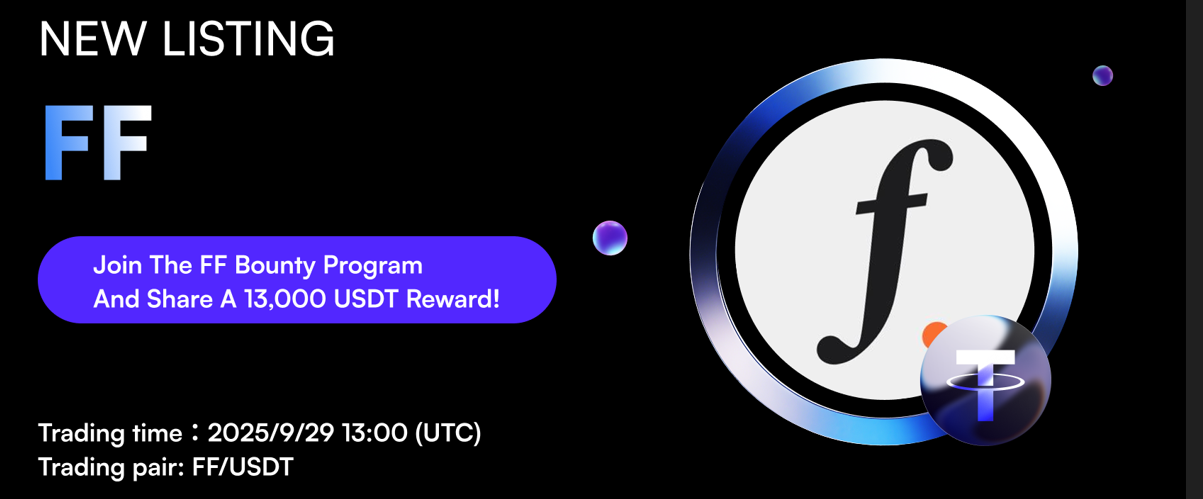
Falcon Finance Staking
Falcon Finance’s restaking model allows users to lock sUSDf for a fixed term to amplify yields. This provides flexible yield options beyond basic staking, making it attractive for both retail and institutional participants.
Future staking integrations with $FF are expected, particularly around governance, but details are not yet disclosed.
Conclusion
Falcon Finance is positioning itself as a universal collateral backbone for DeFi, with the potential to bridge traditional and digital finance. Its growth metrics, strategic partnerships, and innovative dual-token model make it one of the most watched projects in 2025.
While risks remain around regulatory clarity and token supply transparency, Falcon Finance’s strong momentum, multi-chain ecosystem, and potential Binance connection make $FF a token worth keeping on the radar.
You May Also Like

What Is NFPrompt (NFP)? Complete Guide to the AI NFT Platform
Discover NFPrompt (NFP), a Web3 platform combining AI-generated content and NFTs. Learn its use cases, risks, and market potential.

What Is Tenset (10SET)? Full Guide, Use Cases, and Risks
Learn how Tenset (10SET) works, its tokenomics, use cases, and risks. Track crypto live prices and understand its role in the Web3 ecosystem.

What Is Kinka (XNK)? Complete Guide to the Gold-Backed Digital Asset
Discover Kinka (XNK), a gold-backed digital asset. Learn its use cases, risks, tokenomics, and how to trade it while tracking crypto live prices on CoinW.